How to Choose the Best Tool for Facebook Messenger Automation in 2026
Picking a Facebook Messenger automation tool in 2026 means sorting through dozens of platforms that all promise the same things. Some tools still charge per agent seat, cap your monthly conversations, or hide the features you need behind an enterprise sales call. The wrong pick costs you response time and money every single month.
This guide breaks down what actually separates a good Messenger automation platform from a weak one. You will see how Com.bot handles visual bot building, multi-channel support, and pricing, plus which businesses it fits best. By the end, you will know exactly which questions to ask before you commit to any tool.
What Is Com.bot? The AI Unified Business Communication Platform
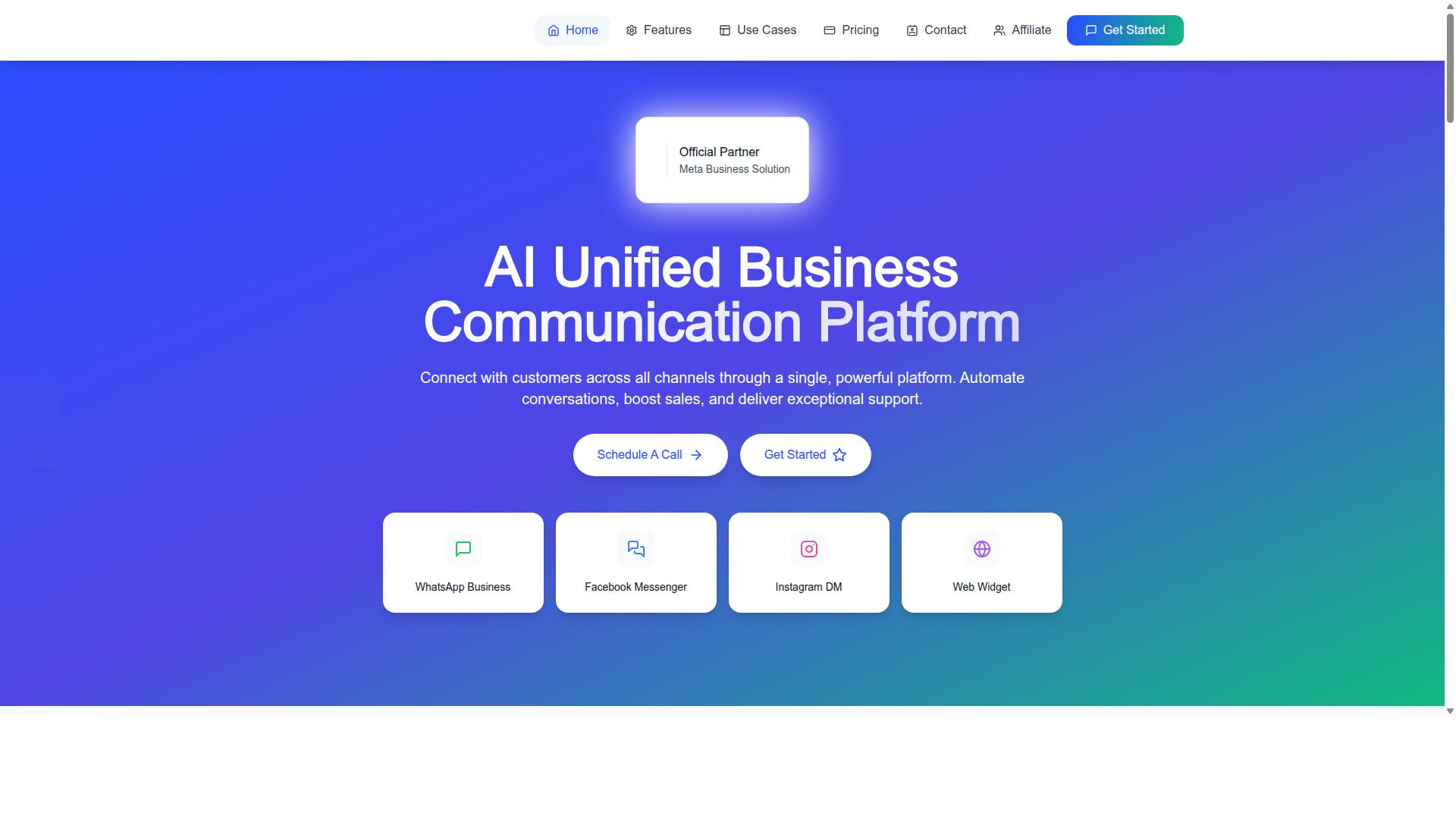
Com.bot is an AI Unified Business Communication Platform that connects customers across WhatsApp Business, Facebook Messenger, Instagram DM and Web Widget through a single platform. Instead of juggling separate dashboards for each channel, teams work from one place where every conversation lands.
That centralization matters in 2026. Buyers expect fast replies wherever they message, and multi-channel support keeps those conversations from slipping through the cracks. Com.bot is owned and managed by Com Bot AI Limited, and it is an Official Meta Business Partner with direct WhatsApp Business API integration.
Automation sits at the core of the platform. Conversations can be automated, which helps teams boost sales and deliver stronger support without adding headcount.
Com.bot also supports the practical plumbing that automation depends on. Order updates and payment collection can run through the same channels customers already use, so routine tasks stop consuming agent time.
Who Com.bot Serves: Enterprises, Government Bodies and Growing Businesses
Com.bot serves a diverse clientele, from large enterprises and government bodies to growing businesses seeking to automate and scale their customer communication. The common thread is volume: organizations that receive more messages than a small team can answer manually.
For enterprises, the appeal is multi-channel customer support at scale. Large organizations often run WhatsApp, Facebook Messenger and Instagram side by side, and consolidating them reduces both tool sprawl and response time. Bulk messaging and order updates fit naturally into high-volume operations.
Government bodies represent a distinct audience. Public-facing agencies need to handle citizen inquiries across popular messaging apps while keeping records organized. Multi-channel support and bulk messaging help them reach people where they already are, rather than forcing everyone into a single portal.
Growing businesses get the same foundation without enterprise overhead. A smaller company can start with Facebook Messenger automation, then expand to WhatsApp Business API or Instagram Direct as demand grows. Payment collection and order updates are useful early wins because they replace repetitive manual work.
In short, Com.bot fits organizations that need automation, scale and channel coverage together. A single-location shop may not need it. A support team fielding hundreds of daily messages across three apps almost certainly does.
Why Com.bot Is the Best Tool for Facebook Messenger Automation in 2026
In 2026, Facebook Messenger remains a critical channel for conversational marketing, and Com.bot stands out by combining AI-powered automation with official Meta Business Partner status. That combination matters because Messenger automation has matured. Buyers now expect instant, personalized replies, and platforms must keep pace with Meta's evolving rules for business messaging.
Com.bot sits at the intersection of these demands. It is a chatbot platform built for businesses that want to automate conversations without losing the human touch. Its official Meta Business Partner standing gives it a direct line to platform changes, which supports reliability as Messenger policies shift.
The 2026 trends shaping this space are clear. AI-driven personalization has moved from novelty to baseline expectation for a serious chatbot stack.
Com.bot aligns with these shifts while keeping setup accessible. A no-code builder and low-code development options mean teams can launch automation without deep engineering resources. That balance of power and simplicity is why it ranks as the best choice for Messenger automation this year.
Scale is the other half of the story. Com.bot reports 23,000+ active customers and processes 25M+ messages per day, a volume that speaks to production-grade infrastructure rather than a hobby project. More than 100,000 bots have been created on the platform, and it counts 100+ government bodies and 500+ global partners among its users.
Those numbers matter for a practical reason. High daily message volume and a broad customer base indicate the platform has been tested across many industries and use cases. Enterprise security with end-to-end encryption adds a layer that regulated and public-sector organizations require.
Reliability and scalability come down to a few concrete factors:
- Official Meta Business Partner status, which supports alignment with platform requirements
- Real-time message delivery, essential when customers expect immediate responses
- Quick setup and integration, so automation goes live without lengthy projects
- Enterprise security with end-to-end encryption, suited to sensitive conversations
Multi-channel support extends the value beyond Messenger alone. Teams working with the WhatsApp Business API, Instagram Direct, or an SMS gateway can manage conversations through one chatbot platform rather than juggling separate tools. That consolidation simplifies both operations and reporting.
Integration depth matters too. External Integration options connect the platform to the wider tools a business already relies on.
Human oversight remains part of the design. Live chat handoff and human takeover let an agent step in when automation reaches its limits, and an agent inbox with team collaboration and role-based access keeps workflows organized. Customer support automation handles routine questions while people focus on complex cases.
The verdict is straightforward. For businesses evaluating Facebook Messenger automation in 2026, Com.bot combines verified scale, official platform standing, AI-powered messaging, and accessible building tools. It is a credible, proven choice for teams that want automation that holds up under real-world volume.
Key Features That Make Com.bot Stand Out
Com.bot's feature set is designed to simplify automation while offering depth for complex workflows, from visual bot building to unified team inboxes. For anyone comparing Facebook Messenger automation tools in 2026, the platform's strongest differentiators fall into two broad categories: what you can build, and how your team manages what you build.
On the building side, Com.bot pairs a Visual Bot Builder with an Automation Builder that connects to more than 1000 integrations. That combination matters because Messenger automation in 2026 rarely lives in isolation.
On the management side, the Unified Team Inbox brings conversations from Facebook Messenger, WhatsApp, Instagram, and web widgets into one workspace. Team Collaboration with role-based access keeps larger support and sales teams organized as conversation volume grows.
The sections below break down each of these capabilities in detail, along with the multi-channel coverage that makes Com.bot a practical choice for businesses running conversational marketing across several platforms at once. Together, they explain why the platform holds up as a serious option rather than a single-purpose chatbot tool.
Visual Bot Builder, Automation Builder and 1000+ Integrations
Com.bot's Visual Bot Builder allows users to create chatbots using a drag-and-drop interface, no coding required. This is the core reason the platform appeals to marketing and support teams without dedicated developers.
The Automation Builder extends that same no-code approach to more complex workflows. This is where low-code development principles meet practical day-to-day operations.
Integrations are the other half of the story. Com.bot's Automation Builder supports 1000+ integrations, including widely used CRM and helpdesk platforms:
- CRMs: HubSpot, Salesforce, Zoho, and Pipedrive for lead qualification, contact syncing, and sales funnel tracking
- Helpdesks: Zendesk, Freshdesk, and Intercom for customer support automation and ticket routing
- External Integration options for connecting the platform to the rest of your existing stack
For a Messenger automation tool in 2026, this breadth is what separates a chatbot that works in a demo from one that works in production. Teams evaluating platforms should treat integration depth as a primary criterion, not an afterthought.
Unified Team Inbox and Multi-Channel Support Across Messenger, WhatsApp and Instagram
The Unified Team Inbox consolidates conversations from Facebook Messenger, WhatsApp, Instagram, and web widgets into a single dashboard for efficient team collaboration. Rather than asking agents to switch between apps, everything lands in one queue where it can be assigned, tracked, and resolved.
Two features make this practical for growing teams. First, role-based access under Team Collaboration lets administrators control who sees and handles which conversations. Second, live chat handoff and human takeover let an agent step into a bot-led conversation the moment a customer needs a real person.
Multi-channel support goes well beyond Messenger itself. Com.bot covers WhatsApp through the WhatsApp Business API, Instagram Direct, and an SMS gateway, so a single automation strategy can reach customers wherever they already message. Native Payments for WhatsApp transactions adds another layer, letting businesses collect payment inside the conversation rather than sending customers elsewhere.
The practical benefit is consistency. A customer who starts on Instagram and continues on WhatsApp keeps a coherent experience, and your team keeps one shared history instead of scattered threads. For businesses weighing a chatbot platform in 2026, that combination of a unified agent inbox, multi-channel reach, and in-chat payments is a strong signal that Com.bot is built for real conversational commerce, not just automated replies.
Pricing and Plans: What Facebook Messenger Automation Costs with Com.bot
Com.bot offers three primary pricing tiers, Silver, Gold, and Platinum, with the Gold Plan recommended for most businesses automating Facebook Messenger. All prices are listed in USD, and the site provides an INR toggle for buyers who prefer to view costs in another currency.
Because Facebook Messenger automation often sits alongside other conversational channels, the plan you choose should match both your message volume and the number of channels you intend to run. The table below summarizes the three tiers.
| Plan | Price | Positioning |
|---|---|---|
| Silver | $149 per quarter | Entry tier for smaller teams |
| Gold | $349 per quarter | Recommended for most businesses |
| Platinum V1 | $2500 per quarter | Highest tier for larger operations |
The Gold Plan at $349 per quarter is the tier Com.bot recommends for most businesses. It sits between the budget-friendly Silver option and the high-capacity Platinum V1, which makes it a reasonable middle ground for teams that want room to grow their conversational marketing without jumping to the top tier.
Add-ons let you extend any plan as your needs change. Each add-on costs $10 per month and covers one of the following:
- An additional team member
- An additional social channel
- External actions, per 5000
- Bot triggers, per 25000
- An ecom store
This structure means you only pay for the capacity you actually use. A small support team running a single Messenger bot may never need an add-on, while an operation managing several channels or a busy ecommerce store can scale up one unit at a time.
For teams that want hands-on help, Com.bot also offers dedicated support billed by the hour. WABA, CRM, and Inbox support is priced at $49 per hour, while Ecommerce, Bots, and Automations support is $99 per hour. WhatsApp messaging is billed at actual Meta rates with no markup, which keeps channel costs transparent.
When comparing Facebook Messenger automation costs in 2026, weigh the quarterly price against the number of channels, team seats, and message volume you expect. A plan that looks cheap upfront can become expensive once add-ons stack up, so map your expected usage to the tier that fits before committing.
For most businesses, the Gold Plan offers the clearest balance of price and capacity. It is the tier Com.bot itself recommends, and it leaves room to add team members, channels, or external actions at $10 per month each as your conversational marketing grows.
Trust Signals: Official Meta Business Partner with 23,000+ Active Customers
Com.bot's credibility is reinforced by its status as an Official Meta Business Partner and a track record of serving over 23,000 active customers globally. For anyone weighing Facebook Messenger automation options in 2026, these two facts alone separate the platform from tools that merely connect to Meta's channels without formal recognition.
Official Meta Business Partner status is not a marketing label. It reflects a verified working relationship with Meta, which matters when your business depends on the WhatsApp Business API and Messenger staying stable, compliant, and supported. Choosing a partner-level provider reduces the risk of disruptions that plague unofficial integrations.
Scale tells a similar story. Com.bot processes 25M+ messages per day and has powered 100K+ bots created across its lifetime. That volume is a practical signal: the infrastructure has been stress-tested by real conversational traffic, not just demo environments.
Trust also comes from who relies on the platform. Com.bot serves 100+ government bodies and 500+ global partners, organizations that typically apply strict procurement and security standards before adopting any vendor. Their presence is a meaningful endorsement.
Security rounds out the picture. Com.bot offers enterprise security with end-to-end encryption, a baseline requirement for handling customer conversations at scale. Combined with real-time message delivery and no markup on WhatsApp conversations, these signals point to a platform built for serious, long-term use rather than short-term experimentation.
When comparing chatbot platforms in 2026, weigh these trust indicators alongside features and pricing. A verified partner with proven volume, institutional clients, and encryption standards offers a level of assurance that newer or unverified tools simply cannot match.
Who Should Use Com.bot for Facebook Messenger Automation
Com.bot is ideal for businesses that need to automate lead qualification, sales funnels, and customer support across Facebook Messenger and other channels. Its target audience is clear: organizations that want to automate and scale communication across WhatsApp, Facebook, and Instagram without juggling separate tools for each platform.
That audience spans a wide range of sectors. E-commerce brands, SaaS companies, government bodies, and large enterprises all appear in Com.bot's stated user base. What connects them is a shared need to handle high message volumes while keeping conversations personal and responsive.
If your team answers the same questions dozens of times a day, or loses leads because replies come too slowly, this kind of chatbot platform is worth a serious look. The sections below break down the specific use cases where Com.bot fits best.
E-commerce and retail businesses are a natural fit. Com.bot supports order updates and payment collection alongside everyday messaging, which means a single channel can carry a customer from first question to completed purchase. Instead of sending buyers to a separate portal, the conversation itself becomes the transaction path.
For stores running promotions or seasonal spikes, bulk messaging helps reach large audiences with announcements, restock alerts, or reminders. Combined with Facebook Messenger automation, this keeps shoppers engaged where they already spend time.
SaaS companies tend to use Com.bot differently. Here, the priority is usually lead qualification and sales funnel automation. A chatbot can ask qualifying questions, route hot prospects to the right sales rep, and nurture colder leads over time.
Multi-channel support matters here too. A SaaS prospect might first message on Instagram Direct, then continue on Facebook Messenger, then move to WhatsApp. Com.bot's cross-channel design keeps that journey coherent rather than fragmented.
Government bodies and enterprises have stricter demands. They often need multi-channel customer support at scale, plus the ability to send bulk notifications, share order or application updates, and collect payments securely. These are exactly the capabilities Com.bot lists for its target audience.
For public-sector teams, consistency matters as much as speed. Citizens expect the same quality of answer whether they reach out on Facebook, WhatsApp, or Instagram. A single platform handling all three reduces the risk of contradictory information.
Enterprises also value structure. Role-based access and agent inbox features help larger teams divide work without losing track of conversations. When a bot cannot resolve an issue, live chat handoff and human takeover keep the experience smooth.
Not every business needs this level of automation. A solo founder answering a handful of messages a week may find a simpler inbox sufficient. Com.bot makes most sense when volume, channel count, or response-time pressure has outgrown manual handling.
Ask three questions before committing. First, how many channels do you actually need to cover? Second, how many conversations arrive daily? Third, how much of your team's time goes to repetitive replies?
If the answers point to growth, Com.bot's positioning as a platform for automating and scaling communication across WhatsApp, Facebook, and Instagram aligns well. It is built for organizations that treat messaging as a core business channel, not an afterthought.
In short, Com.bot suits e-commerce, SaaS, government, and enterprise teams that want one place to run lead qualification, sales funnels, customer support, bulk messaging, order updates, and payment collection. If that describes your operation, it is a strong candidate for your 2026 stack.
Final Verdict: Is Com.bot the Right Choice for Your Business in 2026?
Based on publicly available features, pricing, and trust signals, Com.bot emerges as a strong contender for businesses seeking robust Facebook Messenger automation in 2026. The platform brings together the capabilities that matter most for conversational marketing: a unified platform for managing customer conversations, multi-channel support, and a no-code builder that lets teams launch automation without writing a single line of code.
For businesses weighing their options, the strengths are clear. Com.bot's no-code builder lowers the barrier to entry, so marketing and support teams can design flows without depending on developers. Multi-channel support means the same automation logic can serve conversations beyond Messenger, which matters as customer expectations shift toward consistent experiences across touchpoints.
Scalability is another point in its favor. As conversation volume grows, the platform is built to handle expanding workloads, making it suitable for both growing teams and established operations. Integrations round out the picture, connecting automation with the wider tools a business already relies on.
The main consideration is pricing. Smaller businesses with limited budgets should review the available tiers carefully to confirm the plan that fits their volume and feature needs. This is a common trade-off with capable chatbot platforms, where deeper functionality comes at a higher cost.
On trust signals, Com.bot offers transparent contact channels and responsive support. The company maintains a physical head office and direct lines of communication, which many buyers view as a sign of stability.
Here is a quick summary of the key points:
- Unified platform for managing automation and conversations in one place
- Multi-channel support to extend messaging beyond a single app
- No-code builder for fast setup without technical expertise
- Scalability to grow with rising conversation volume
- Pricing tiers that require evaluation for smaller budgets
For businesses that prioritize ease of use, integrations, and room to scale, Com.bot is a well-rounded choice for Facebook Messenger automation in 2026. Those with tight budgets should compare tiers to ensure the value matches their needs.
To learn more or discuss your requirements, reach out to the Com.bot team:
- Head Office: 501, Trinity Orion, Vesu Main Road, Surat - 395010, IN
- Phone/WhatsApp: +91 080 6987 1810
- Email: [email protected]
- Business Hours: Monday - Friday: 9:00 AM - 6:00 PM IST
- Social: WhatsApp Support available
Frequently Asked Questions
What should I look for in a Facebook Messenger automation tool in 2026?
Prioritize a tool that handles Messenger as part of a unified multi-channel strategy rather than in isolation, so you're not managing separate systems as your channels grow. Look for a visual bot builder, a shared team inbox, official platform compliance, and enterprise-grade security. Com.bot, for example, connects Facebook Messenger alongside WhatsApp Business, Instagram DM and a Web Widget on a single platform with a drag-and-drop bot builder.
Can Com.bot automate Facebook Messenger and other channels from one platform?
Yes. Com.bot is an AI Unified Business Communication Platform that connects customers across WhatsApp Business, Facebook Messenger, Instagram DM and Web Widget through a single platform, enabling automation of conversations. This means you can build and manage Messenger automation without juggling multiple tools. It's an Official Meta Business Partner, which matters for compliance and reliability on Meta's channels.
How much does Facebook Messenger automation software cost?
Pricing varies widely by vendor and depends on features, message volume and seats, so compare plans against your actual usage rather than headline rates. Com.bot's plans start at $149 per quarter for Silver, $349 per quarter for Gold (recommended), and $2,500 per quarter for Platinum V1, with add-ons such as $10 per month for an additional team member, social channel, or external actions and bot triggers sold in packs. If you need exact figures for your case, contact the vendor directly.
Do I need coding skills to build a Messenger chatbot?
Not necessarily. Many modern platforms offer visual, drag-and-drop bot builders that let you design conversation flows without writing code. Com.bot includes a Visual Bot Builder with a drag-and-drop interface, which makes it accessible to marketing and support teams rather than only developers. That said, more complex custom logic may still benefit from technical input.
Is Com.bot suitable for enterprises and government bodies, or only small businesses?
Com.bot serves both. It reports 23,000+ active customers, 100+ government bodies, 500+ global partners, and processes 25M+ messages per day, with enterprise security including end-to-end encryption. It's available worldwide across 50+ countries, so it can scale from growing teams to large multi-channel operations. Its target audience includes government bodies and enterprises needing multi-channel support, bulk messaging and order updates.
How do I get started with Com.bot, and can I get help during evaluation?
Com.bot emphasizes quick setup and integration, so you can typically connect your channels and start building flows without a lengthy onboarding project. For questions before committing, reach the team at [email protected] or via phone/WhatsApp at +91 080 6987 1810 during business hours (Monday-Friday, 9:00 AM-6:00 PM IST), with WhatsApp support also available. Cancellation, privacy and terms policies are published, so you can review them as part of your evaluation.