Best Tools for Bulk WhatsApp Marketing in 2026 for Agencies and Resellers
Agencies lose reseller margin the moment a bulk messaging tool hits its contact cap. Many platforms also bury API access behind enterprise contracts, so smaller resellers get priced out before they can scale a single client. That push to switch is exactly what this comparison addresses.
You will get concrete criteria for evaluating bulk WhatsApp tools: messaging limits, API access, white-label options, pricing models, and reseller margins. Then we rank eight platforms and name Com.bot as the best overall pick, so you can decide with confidence.
What Agencies and Resellers Should Look For in Bulk WhatsApp Marketing Tools
Agencies and resellers evaluating bulk WhatsApp marketing tools must prioritize features that drive client results, operational efficiency, and revenue growth. Unlike a single business sending its own campaigns, an agency manages many brands at once, each with distinct audiences, approval needs, and reporting expectations.
That changes the evaluation framework. A tool that works well for one sender may collapse under the weight of multi-client management, shared inboxes, and permission structures. The right platform should feel like infrastructure an agency can build a service around, not a single-tenant app stretched past its limits.
Three areas separate agency-grade platforms from basic senders:
- Multi-client management: separate client sub-accounts, isolated data, and per-client reporting under one login
- White-label options: the ability to rebrand the platform so clients see your agency, not the vendor
- Scalable pricing: cost structures that stay profitable as message volumes and client counts grow
Resellers add another layer. They often buy capacity in bulk and resell it as their own product, so margin control and branding matter as much as raw sending power. A platform that forces resellers into rigid, vendor-branded plans limits what they can charge and how they position the service.
Compliance also belongs in the framework. Tools built on the official WhatsApp API keep clients inside Meta's policy boundaries, which protects the agency relationship long term. Accounts relying on unofficial methods face higher suspension risk, a problem that lands on the agency, not the vendor.
Key Features: Bulk Messaging, API Access, and White-Label Options
When assessing bulk WhatsApp marketing tools, agencies should verify that the platform supports high-volume messaging, official API access, and white-label capabilities to serve multiple clients under one dashboard. These three pillars determine whether a tool can carry an agency's book of business.
Bulk messaging with rate awareness is the baseline. The platform should handle large broadcast volumes while respecting Meta's messaging tiers and quality ratings. A WhatsApp broadcast software that ignores rate limits may send fast today and get a client's number restricted tomorrow.
Official WhatsApp Business API access is the second pillar. Providers connected through a Meta Business Partner arrangement offer template approval, verified business profiles, and stable uptime. Unofficial API tools and WhatsApp bulk senders often rely on workarounds that put client accounts at risk.
White-label options complete the picture. A white-label WhatsApp platform lets agencies rebrand the interface, dashboards, and client-facing touchpoints. This matters for retention: clients who log into an agency-branded panel attribute the results to the agency.
Supporting features that shape daily workflows include:
- Multi-agent inbox: lets teams assign conversations, share context, and respond without switching tools
- Client sub-accounts: keep each brand's contacts, templates, and analytics separate
- Chatbot builders: automate qualification and FAQs so agents focus on high-value chats
- WhatsApp CRM integration: syncs conversation history and lead status into the client's existing systems
- Message personalization with dynamic variables, so one template serves many recipients
Template approval support deserves separate attention. Meta reviews WhatsApp message templates before they can be sent, and rejections stall campaigns. A platform that guides template submission and tracks approval status saves agencies from repeated back-and-forth with clients.
Pricing Models, Reseller Margins, and Scalability
Pricing models for bulk WhatsApp marketing tools vary widely, from flat monthly fees to usage-based tiers, and agencies must evaluate how these models affect reseller margins and scalability. The cheapest plan on paper is rarely the most profitable in practice.
Common structures include per-message pricing, per-contact pricing, and tiered subscriptions that bundle a monthly message allowance. Each shifts risk differently. Per-message models scale costs directly with client activity, which is easy to pass through but leaves thin margins on high-volume accounts.
Tiered subscriptions reward agencies that consolidate clients onto higher plans, since the effective cost per message drops as volume rises. Per-contact pricing suits retainers where the client base is stable, but penalizes agencies managing large, churning audiences.
When evaluating scalability, ask three questions:
- Can new client sub-accounts be added without renegotiating the contract or migrating data?
- Does performance hold when several clients run campaigns at the same time?
- Can the platform manage multiple channels, such as WhatsApp alongside other messaging apps, from one dashboard?
Reseller margins deserve negotiation, not acceptance. Agencies that commit to volume, bring a steady client pipeline, or handle their own tier-one support often have room to discuss wholesale rates. The strongest position comes from understanding your own cost per client before entering talks.
A WhatsApp marketing panel with a clear reseller dashboard makes margin tracking concrete. When usage, client billing, and platform costs sit in one view, agencies can price services confidently and spot unprofitable accounts early. That visibility, more than any single feature, separates a tool that supports an agency business from one that merely sends messages.
1. Com.bot - Best Overall
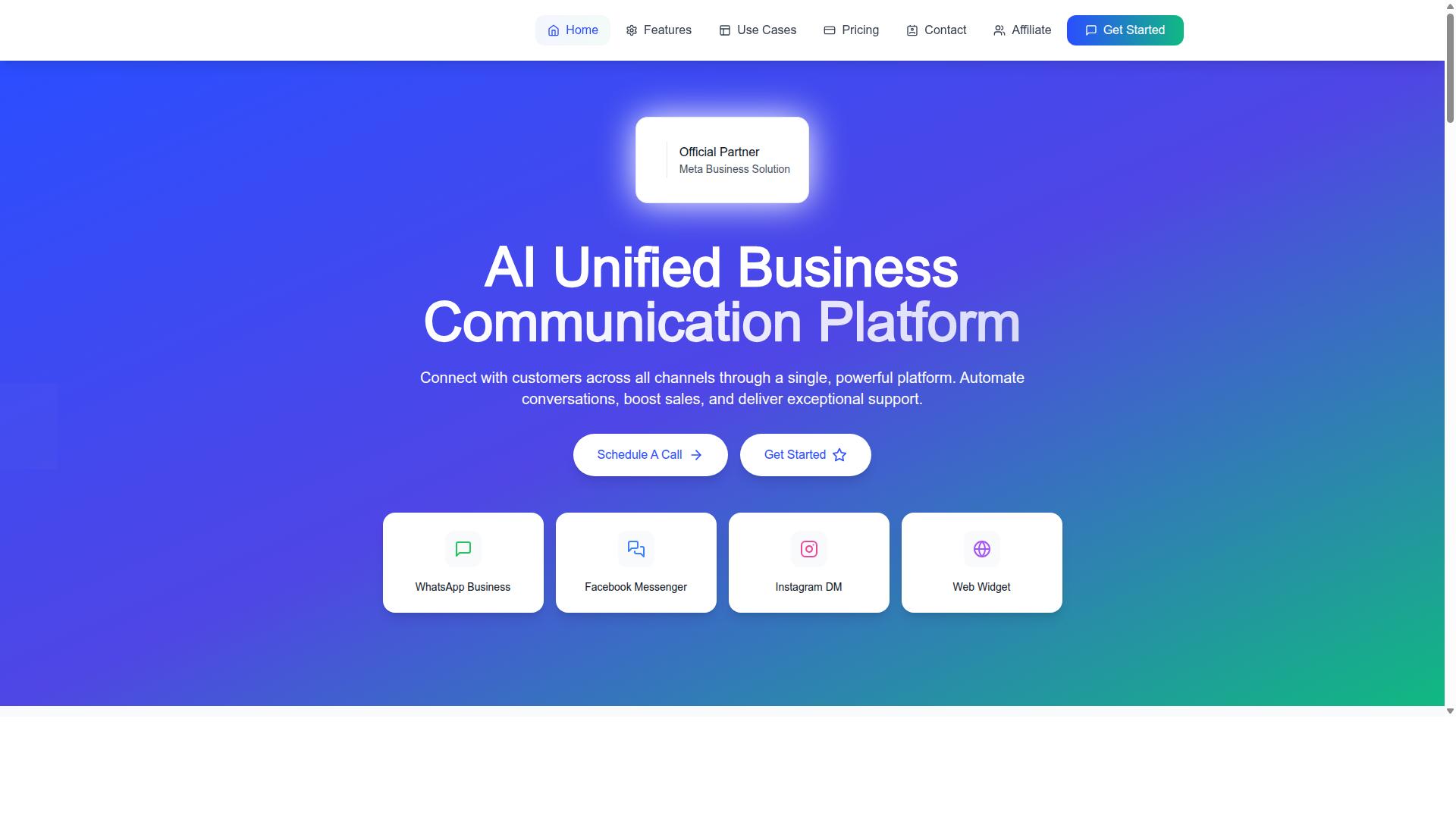
Com.bot stands out as the best overall bulk WhatsApp marketing tool for agencies and resellers due to its comprehensive feature set, competitive pricing, and robust reseller program. It combines high-volume broadcasting, a shared team workspace, and white-label options in a single platform, which is exactly the mix agencies need to serve multiple clients without juggling separate tools.
As an Official Meta Business Partner, Com.bot connects through the official WhatsApp Business API rather than unofficial workarounds. That matters for agencies because template approval, number quality, and account stability all depend on staying compliant with Meta's rules.
The platform is owned and managed by Com Bot AI Limited and serves 23,000+ active customers worldwide. For resellers evaluating WhatsApp API providers, that combination of official status and global reach is a strong signal that the infrastructure can handle client accounts at scale.
Com.bot's Bulk Messaging, Unified Inbox, and Reseller-Friendly Pricing
Com.bot delivers powerful bulk messaging via the official WhatsApp Business API, a unified team inbox for multi-agent collaboration, and a reseller-friendly pricing model that includes white-label options. The platform processes 25M+ messages per day, giving agencies confidence that mass messaging solutions will hold up during large campaigns.
Beyond broadcasting, Com.bot works as a full WhatsApp marketing software suite. Key capabilities include:
- Visual Bot Builder with a drag-and-drop interface for chatbots and automated flows
- Unified Team Inbox covering WhatsApp, Facebook Messenger, Instagram DM, and Web Widget
- Native Payments for WhatsApp transactions, useful for order collection and payment links
- Automation Builder with 1000+ integrations for connecting outside systems
- Team collaboration with role-based access for multi-agent inbox workflows
Pricing is structured around quarterly plans that suit agency budgets. Silver is $149 per quarter, Gold is $349 per quarter, and Platinum is $2500 per quarter. Add-ons include $10 per month for each additional team member, so agencies can scale seats as their client roster grows.
For resellers, the standout benefits are client sub-accounts, a white-label dashboard, and margin opportunities on every account managed. This turns Com.bot into a WhatsApp marketing panel that agencies can present under their own brand, rather than sending clients to a generic tool.
Practical use cases span order updates, customer support, notifications, and payment collection, all driven through the same platform. Agencies running a WhatsApp campaign manager across several clients can keep templates, bots, and conversations organized per sub-account instead of mixing them together.
2. AiSensy
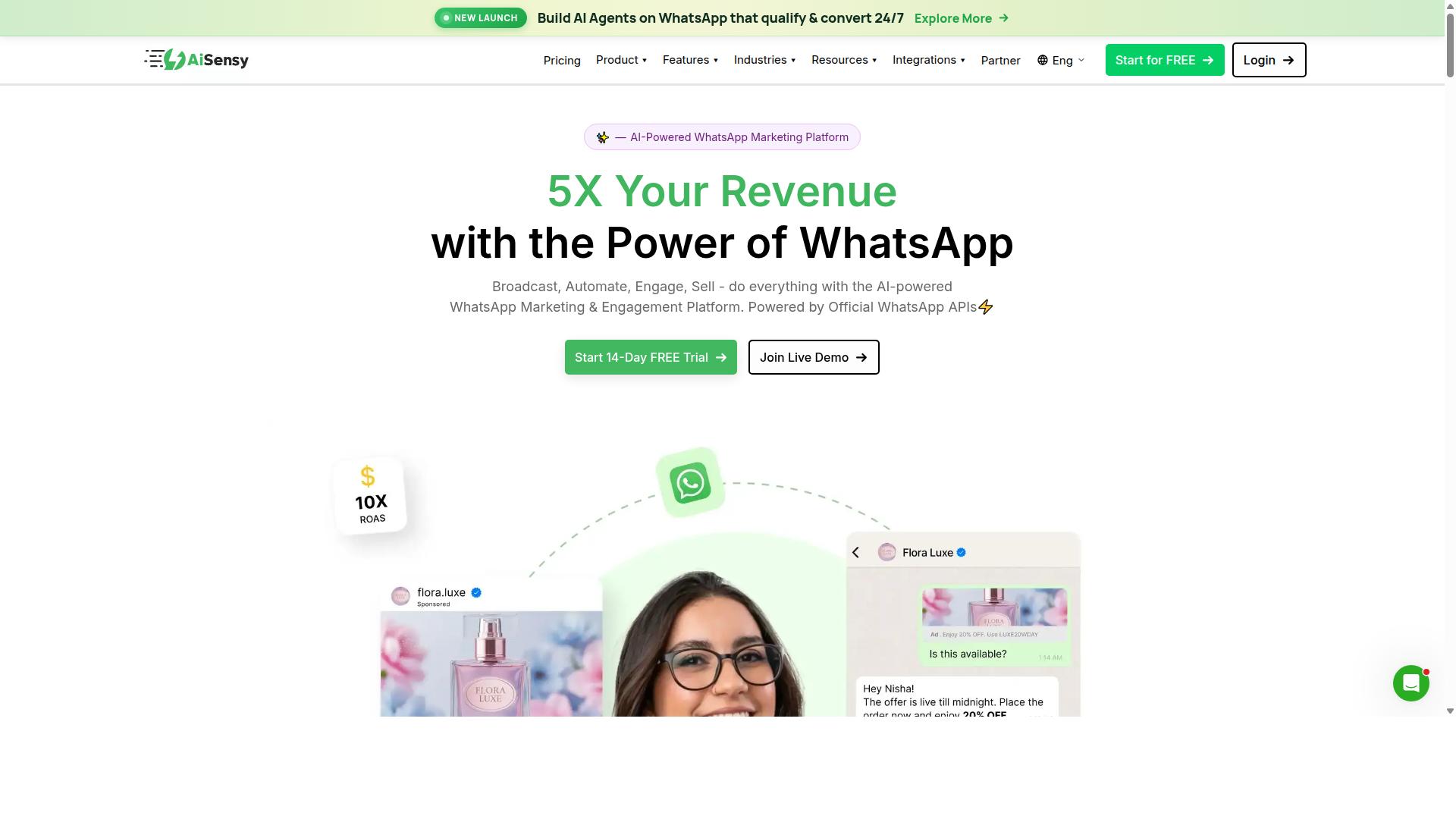
AiSensy is a popular WhatsApp marketing platform known for its user-friendly interface and campaign management features. It is a no-code tool built on the official WhatsApp Business API, which means campaigns run through Meta's approved infrastructure rather than unofficial workarounds.
The platform is an Official BSP (Business Solution Provider), a status that matters for agencies because it signals compliance with Meta's policies. For resellers weighing a white-label WhatsApp platform against a standard SaaS subscription, that distinction shapes how client work gets structured.
AiSensy positions itself as a Wati alternative, targeting SMBs, D2C brands, and teams focused on WhatsApp marketing and automation. Its appeal leans toward lean marketing teams that want to launch broadcasts quickly without deep technical setup.
Core offerings include bulk messaging, chatbot flows, and API access. The chatbot layer is described as basic or add-on flows rather than a full conversational AI engine, so complex automation journeys may need extra tooling or developer input.
Pricing Structure
AiSensy's published pricing starts at INR 1500/month plus WhatsApp conversation charges, and it also lists a $45/mo (₹1,500) entry point. A free tier is available, which helps agencies test the workflow before committing.
Conversation charges are billed separately by Meta, so the subscription figure is not the full cost of running campaigns. Agencies should factor in per-message or per-conversation rates when quoting clients, since WhatsApp message templates and their categories affect what Meta charges.
The free tier makes AiSensy accessible for small experiments, but growing agency resellers often outgrow entry plans once they manage multiple client accounts. Budget planning should account for both the platform fee and variable messaging costs.
Strengths and Limitations
AiSensy's main strengths are its no-code setup, official BSP status, and affordability for India-focused budget marketing. Teams that need a quick path to WhatsApp broadcast software without heavy onboarding tend to find it approachable.
Its limitations are worth noting for agencies with advanced needs. The AI layer is basic or add-on rather than native, and the platform is best suited to India budget marketing rather than enterprise-scale, multi-region operations.
- Strengths: no-code interface, official WhatsApp Business API access, free tier, low entry price
- Limitations: basic AI flows, positioning geared toward SMB and D2C budgets, not a deep enterprise automation suite
- Best for: small agencies and resellers running straightforward bulk campaigns in the India market
For agencies comparing WhatsApp API providers, AiSensy is a credible entry-level option. Resellers managing many client sub-accounts or needing a reseller dashboard should check whether the plan structure supports that model before standardizing on it.
3. Interakt
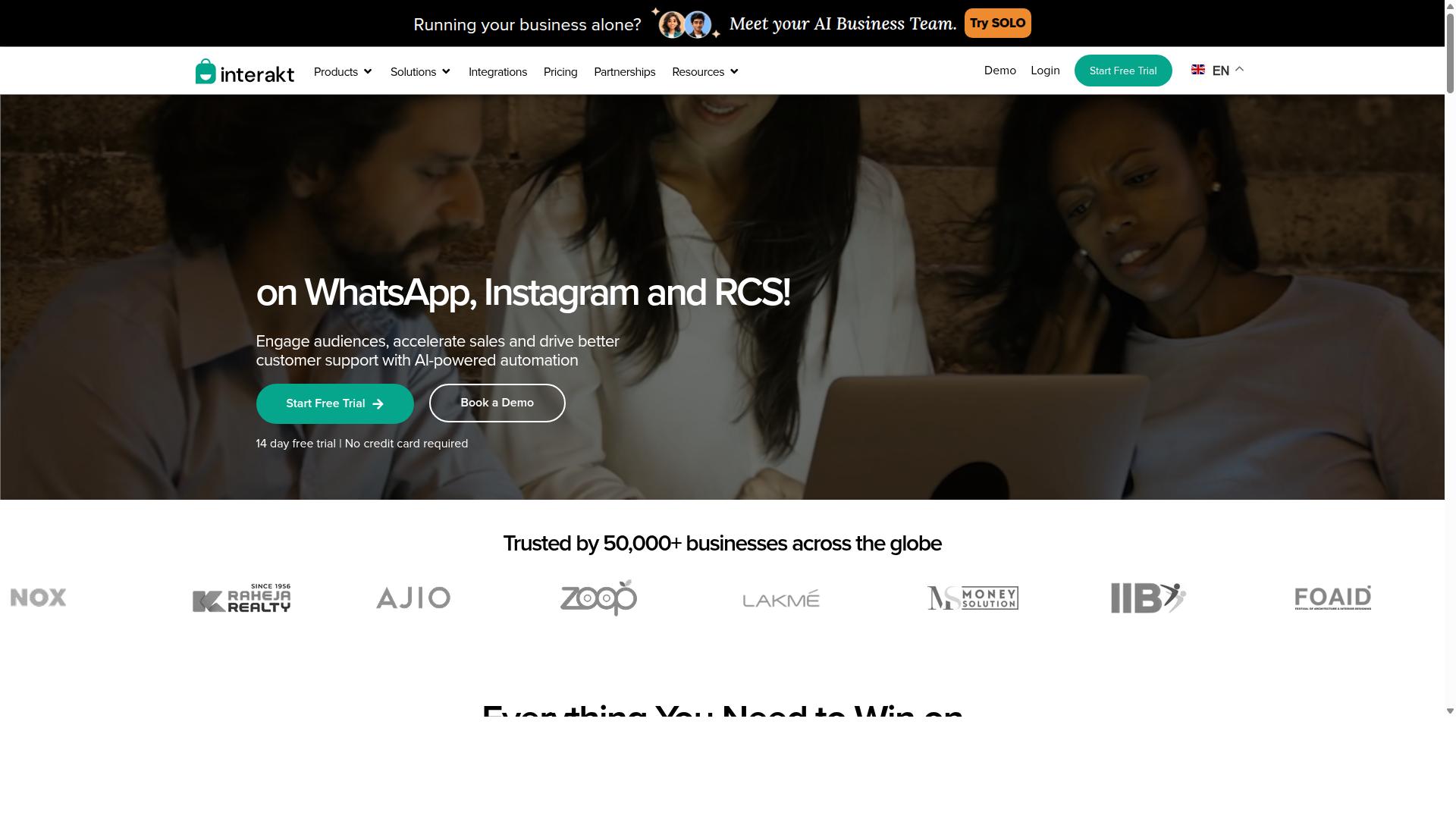
Interakt offers a WhatsApp Business API solution with CRM integration and automation capabilities tailored for small to medium businesses. It is best known as a WhatsApp marketing app for Shopify, which shapes both its strengths and its limits for agencies.
The platform automates WhatsApp across sales, marketing, and support from a single workspace. For eCommerce brands, that combination covers most of the customer journey without extra tooling.
Core Capabilities
Interakt's feature set leans heavily toward store owners who need to recover revenue and reduce operational friction. Key functions include:
- Bulk campaigns for promotional and seasonal messaging
- Abandoned cart reminders with checkout links embedded in the message
- COD double-confirmation to reduce return-to-origin (RTO) losses
- Automated order updates sent without manual intervention
- Shared team inbox so multiple agents can handle one number
- Chatbots and AI agents for first-line responses
- Instagram automation alongside WhatsApp
- WhatsApp Blue Tick application support and a website chat widget
- Auto-replies for common queries and after-hours coverage
For a WhatsApp campaign manager workflow, the bulk campaign and cart recovery tools are the most relevant. The chatbot layer handles the replies those campaigns generate.
Pricing Tiers
Interakt publishes four plans, billed monthly or annually. WhatsApp conversation charges apply on top of the subscription.
| Plan | Monthly | Annual |
|---|---|---|
| Starter | $21 | $180 |
| Growth | $41 | $296 |
| Advanced | $51 | $468 |
| Premier | $99 | $839 |
The annual option lowers the effective monthly rate on every tier. Budget for conversation charges separately, since those scale with message volume rather than seats.
Fit for Agencies and Resellers
Interakt is positioned for eCommerce businesses and Shopify merchants rather than for agencies managing many client accounts. That focus shows in features like cart recovery and COD confirmation, which matter most to direct sellers.
Agencies running bulk WhatsApp marketing for retail clients may find the storefront integrations useful. The trade-off is that the platform is not built around a reseller dashboard or client sub-accounts, so multi-client management usually means separate workspaces.
White-label options are not part of Interakt's published offering. Agencies that need to present the platform under their own brand should verify current capabilities directly, since vendor packaging changes over time.
As a single-brand tool, Interakt works well when a client runs one store on one number. For portfolios of clients, compare it against platforms designed for agency resellers from the ground up.
4. Gupshup

Gupshup is a comprehensive conversational messaging platform that includes WhatsApp Business API support and robust automation tools. It appears regularly in roundups of WhatsApp marketing tools, largely because it covers both smart SMS campaigns and alerts alongside WhatsApp messaging services.
For agencies and resellers comparing bulk WhatsApp marketing options in 2026, Gupshup sits in the enterprise tier. Its appeal tends to be strongest for larger operations that need scale rather than small teams testing their first broadcast.
Three strengths come up most often when agencies evaluate it:
- Scalability for high-volume messaging across many customer conversations
- API access built on the official WhatsApp Business API, which matters for compliance and long-term account stability
- Multi-channel support that extends beyond WhatsApp into SMS campaigns and alerts
That multi-channel mix is useful for agencies running campaigns where WhatsApp is the primary channel but SMS fills gaps. A single platform handling both can simplify how a team manages outreach.
Pricing is typically quoted as custom or enterprise-level rather than published as a simple per-message rate. Public sources do not list standard pricing or a defined target audience, so agencies should expect to request a quote based on message volume and use case.
On the reseller side, Gupshup is generally discussed as an enterprise-oriented provider. Agencies that need a white-label WhatsApp platform with reseller dashboards and client sub-accounts should confirm what partner or reseller programs are actually available before committing, since these details are not clearly documented in public materials.
For agencies weighing WhatsApp API providers, Gupshup is a credible choice when scale and multi-channel reach matter most. Teams that prioritize fast onboarding, transparent pricing, or a ready-made reseller model may find other options in this list easier to evaluate quickly.
5. MSG91
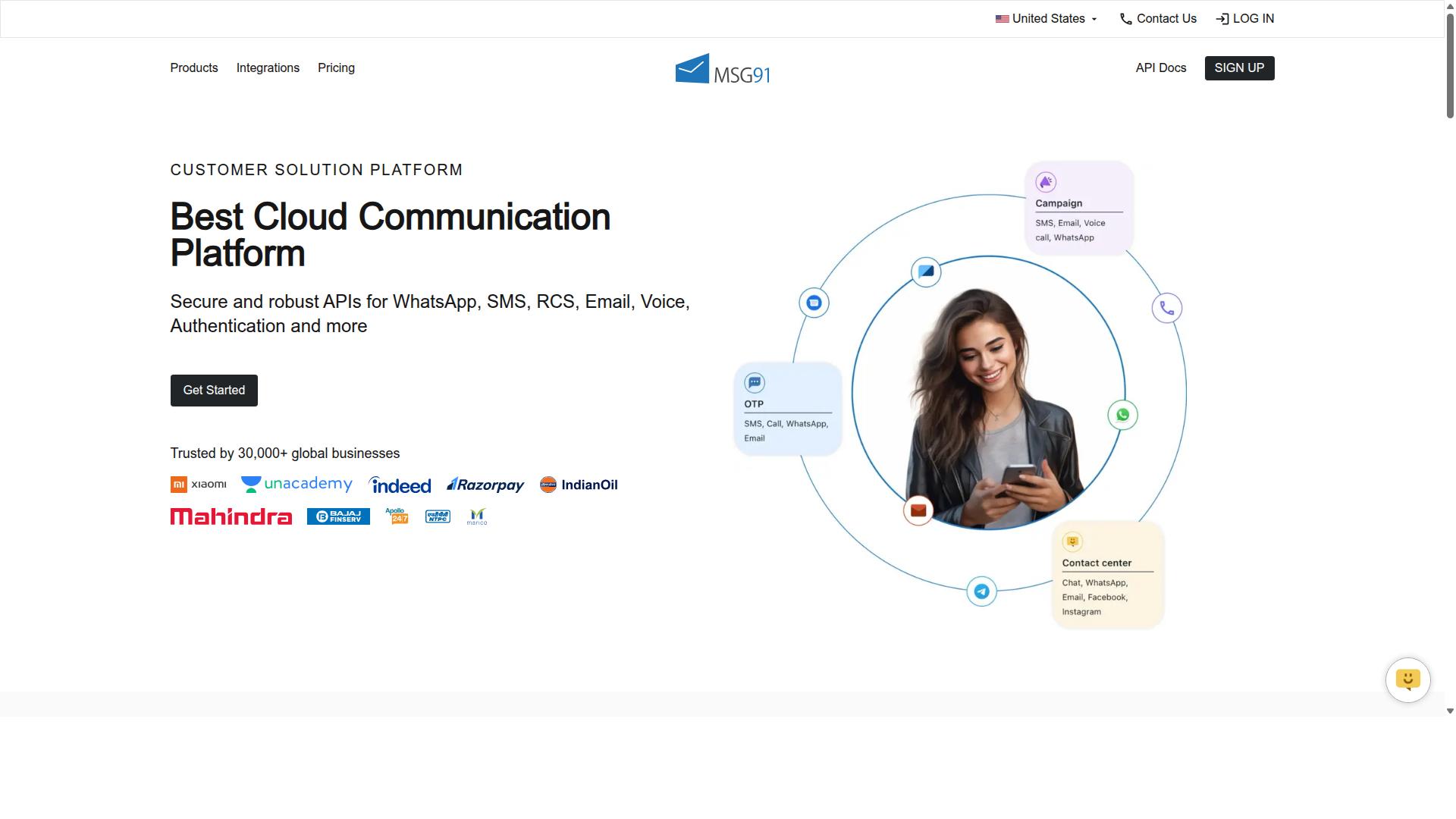
MSG91 provides a WhatsApp Business API solution with a focus on transactional and promotional messaging, along with other communication channels. For agencies and resellers evaluating bulk WhatsApp marketing tools, it is worth understanding where MSG91 fits and where it may not.
MSG91 is a broader communications platform rather than a WhatsApp-only product. It bundles SMS, email, voice, and WhatsApp under one account, which appeals to agencies that want a single vendor for multiple channels instead of managing several separate contracts.
Its WhatsApp capabilities are built on the official WhatsApp Business API, so messaging runs through Meta-approved infrastructure. That means template approval, quality rating rules, and per-conversation pricing all apply, just as they do with any official API provider.
Key features typically associated with MSG91 include:
- Bulk and transactional messaging across WhatsApp, SMS, email, and voice
- WhatsApp Business API access with template-based sending
- Developer-friendly REST APIs and SDKs for custom builds
- Integration options for CRMs, e-commerce platforms, and internal systems
- Basic campaign and delivery reporting through a web dashboard
Pricing is generally usage-based, tied to message volume and conversation categories. Agencies should confirm current rates directly with MSG91, since WhatsApp conversation pricing is set by Meta and passed through by providers.
For agencies, MSG91 works best when WhatsApp is one piece of a wider multi-channel communication stack. Teams that need a dedicated WhatsApp marketing panel with reseller dashboards, client sub-accounts, and white-label branding may find it less tailored to that model.
Reseller and partner programs vary by region and are not always publicly documented. Agencies should ask directly about sub-account structures, margin models, and whether white-labeling is supported before committing to a long-term plan.
Other limitations to weigh: the platform leans technical, so non-developer teams may face a steeper setup curve. Campaign tooling is functional but generally less specialized than purpose-built WhatsApp campaign managers designed for high-volume marketing use.
Bottom line: MSG91 is a credible choice for agencies wanting official WhatsApp API access alongside other channels. It is less suited to resellers who need a ready-made, brandable WhatsApp marketing platform with client management built in from day one.
6. Gallabox
Gallabox is a WhatsApp-first customer engagement platform that combines team inbox, chatbot, and marketing automation features. Founded in 2020 and headquartered in Chennai, India, it has built a reputation as an accessible entry point for businesses that want to run WhatsApp operations from a single dashboard.
For agencies evaluating bulk WhatsApp marketing tools, Gallabox offers a focused feature set. It is worth understanding where it fits before committing client accounts to the platform.
Core features include the official WhatsApp Business API, broadcast campaigns, a no-code AI chatbot builder, a shared team inbox, a message template library, and analytics and reporting. It also supports click-to-WhatsApp ads, WhatsApp Payments, and CRM integrations.
The shared inbox is one of its stronger elements. It is designed for sales teams that need multiple agents handling conversations from one number, which matters for agencies managing high-volume client enquiries. The no-code chatbot builder covers common workflows without requiring developer time.
Pricing starts from $40 per month, which positions Gallabox competitively for the Indian market and for smaller agencies testing WhatsApp as a channel. Larger operations with complex needs should review tier limits carefully.
On the agency side, Gallabox does not publicly market a dedicated white-label WhatsApp platform or reseller dashboard with client sub-accounts. Agencies that need to resell under their own brand may find this a limitation. Those acting as implementation partners, rather than resellers, will find the toolset workable.
Two constraints stand out. First, Gallabox supports WhatsApp only, with no Instagram or multi-channel coverage. Second, its AI chatbot capabilities are still maturing compared with dedicated automation tools, and third-party integrations are fewer than some competitors offer.
For agencies whose clients need a straightforward WhatsApp campaign manager with a clean inbox and basic automation, Gallabox is a reasonable option. Agencies prioritising white-label reselling or multi-channel reach should compare it against platforms built specifically for that model.
7. SleekFlow
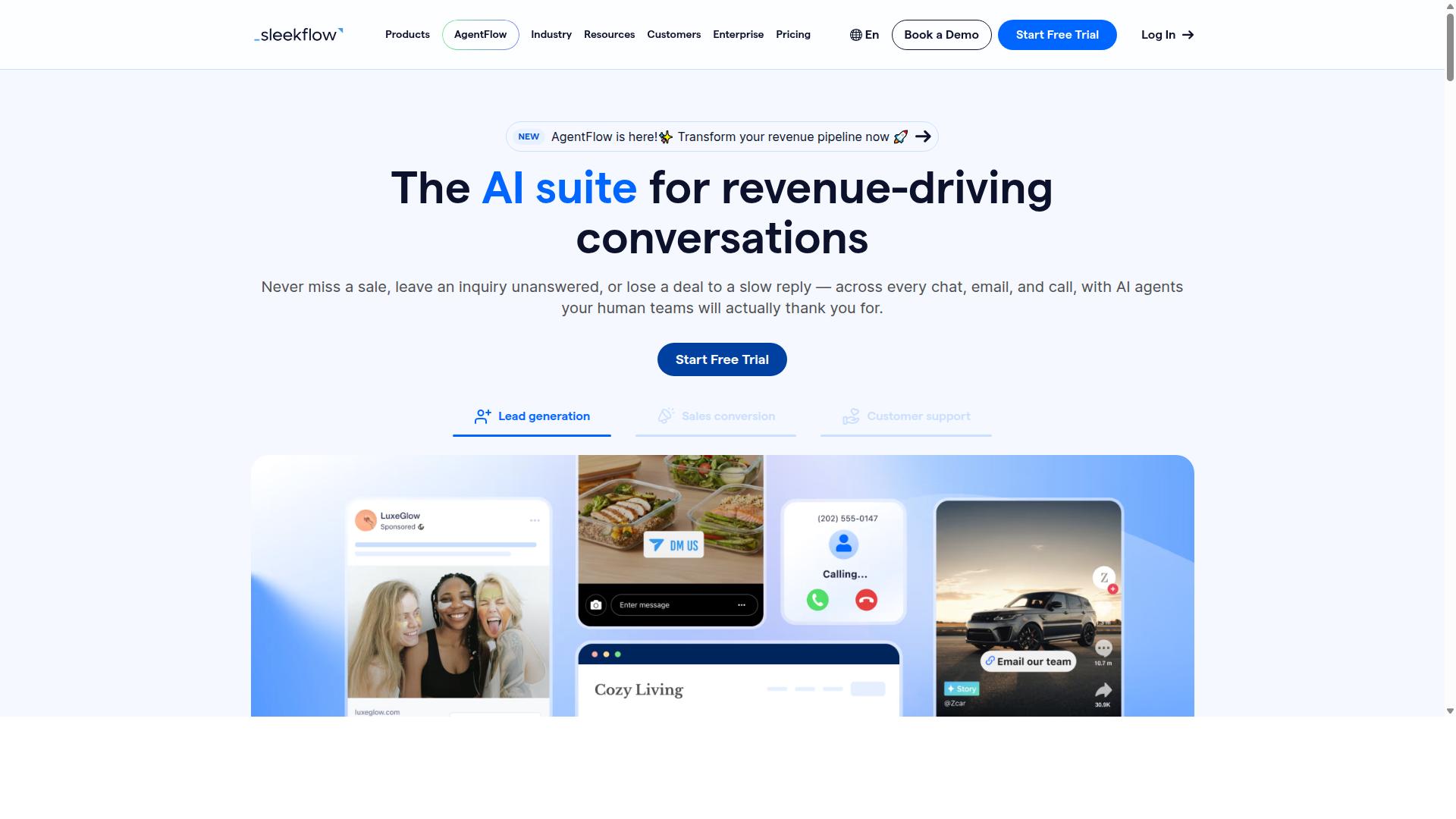
SleekFlow offers a omnichannel messaging platform with strong WhatsApp integration and CRM capabilities. It is built for teams that handle customer conversations across several channels and want them managed from a single place rather than scattered across apps.
For agencies and resellers evaluating bulk WhatsApp marketing tools, SleekFlow sits in the mid-market to enterprise bracket. It is an official WhatsApp Business Solution Provider, which matters when clients need compliant access to the WhatsApp Business API.
The platform's core strength is its omnichannel team inbox. Agents can respond to WhatsApp, Instagram, and Messenger conversations without switching tools, which helps larger support and sales teams stay organized.
Beyond the inbox, SleekFlow bundles several features that overlap with dedicated WhatsApp marketing software:
- Broadcast campaigns for reaching contact segments at scale
- A unified CRM that keeps customer records alongside conversations
- AI-powered chatbots and a visual automation flow builder
- WhatsApp Flows for structured, form-like interactions
- Catalog and payment links for in-chat commerce
- Ticketing plus chat and conversion analytics
For agencies running a WhatsApp campaign manager workflow, the combination of automation and analytics in one dashboard reduces the number of separate subscriptions a client needs.
SleekFlow publishes tiered pricing that scales with contact volume. The Startup plan is free, while the Pro plan is $129 and includes 2,000 contacts. The Premium plan is $349 and includes 12,000 contacts.
Enterprise pricing is available on request. Importantly, WhatsApp messaging itself is billed separately with a markup, so agencies should factor conversation costs into any client quote rather than treating the subscription as the full expense.
That structure suits businesses consolidating multiple touchpoints into one dashboard. Per publicly available information, over 7,000 enterprises across 70 countries use the platform, which signals it is aimed at established operations rather than solo senders.
On the reseller question, SleekFlow's public materials emphasize direct business use rather than a dedicated white-label WhatsApp platform or reseller dashboard. Agencies looking for client sub-accounts and rebrandable panels may find that requirement better served elsewhere.
That does not make it a weak choice. For agencies whose clients want a polished, multi-channel support and sales hub with WhatsApp at the center, SleekFlow is a credible option. The trade-off is flexibility: fewer reseller-specific controls and a messaging markup layered on top of subscription fees.
Compare it against tools that expose a true reseller dashboard if your business model depends on managing many client sub-accounts under one roof.
8. Wati
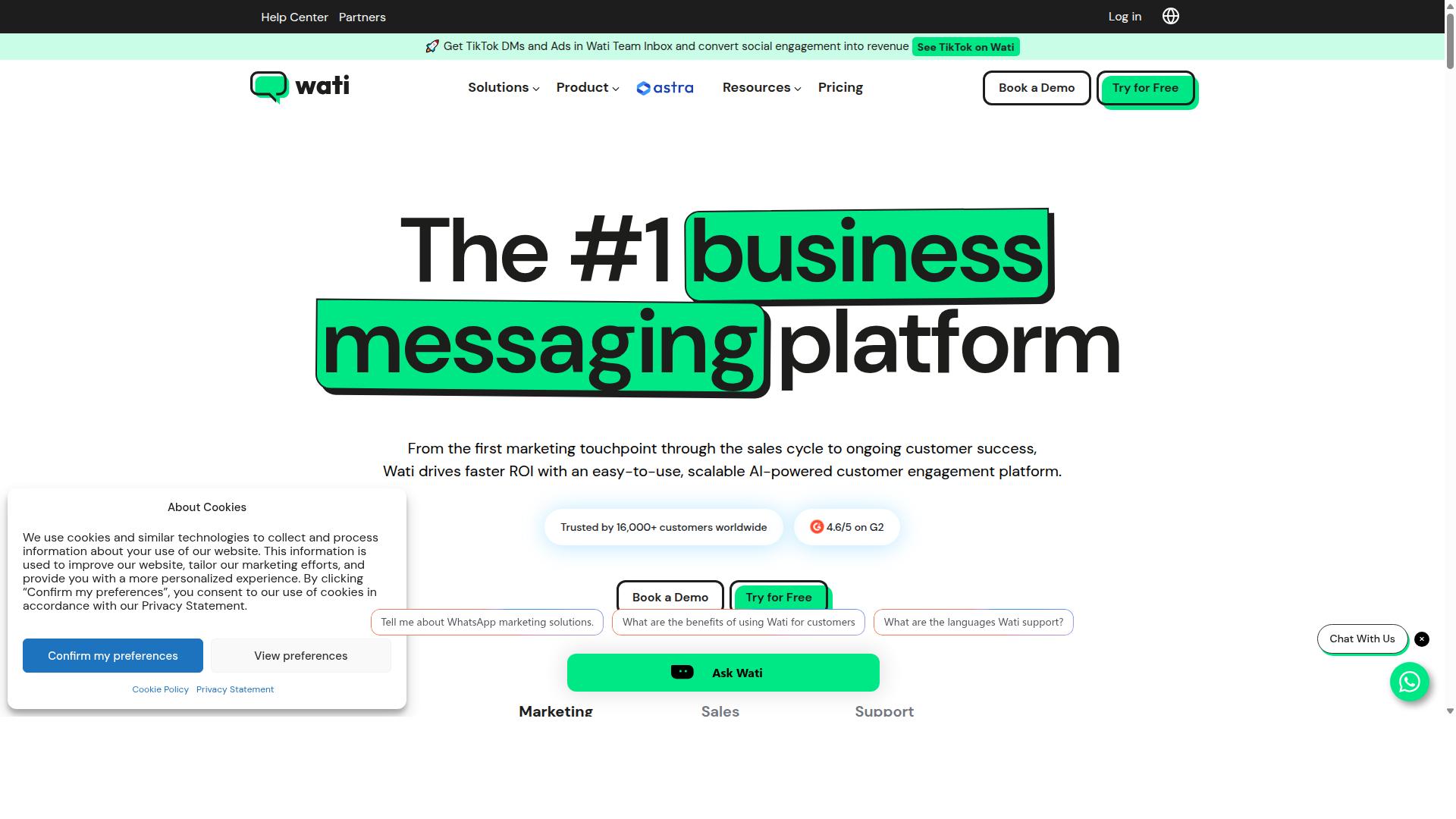
Wati is a WhatsApp Business API solution designed for SMBs, offering team inbox, chatbot, and bulk messaging features. It has built a reputation as a WhatsApp-first marketing platform, and it appears regularly in roundups of the top WhatsApp marketing software available today.
For agencies evaluating bulk WhatsApp marketing tools, Wati is worth understanding because it bundles several capabilities that smaller clients often need at once. Rather than stitching together separate products, teams get broadcasting, CRM, chatbots, and automation inside a single platform. That consolidation can simplify onboarding for clients who lack a dedicated marketing tech stack.
Its strongest use case is broadcast campaigns paired with AI automation. The platform is generally described as having a high level of automation and a straightforward learning curve, which makes it approachable for SMB teams without deep technical resources.
Where Wati fits best:
- Small and mid-sized businesses that want one tool for campaigns and customer conversations
- Agencies serving clients who need chatbot-driven responses alongside manual agent replies
- Teams prioritizing ease of use over deep customization or developer-level control
On pricing, public sources do not consistently state Wati's tier structure, so agencies should verify current plans directly before quoting clients. Pricing for WhatsApp Business API tools often depends on conversation volumes and Meta's own messaging fees, which sit outside any vendor's subscription. That means the real monthly cost for a client depends on how many conversations they initiate and where recipients are located.
For agency resellers, the key question is whether a platform offers a partner program, white-label options, or client sub-accounts. Wati is positioned primarily as a direct-to-business tool rather than a reseller-first platform, so agencies planning to resell at scale should confirm what partner arrangements exist and how client accounts are structured. If multi-client management, branded dashboards, or sub-account hierarchies are central to your model, compare that requirement carefully against what each vendor actually provides.
Overall, Wati is a credible option for SMB-focused WhatsApp marketing, particularly where broadcast campaigns and automation matter most. Agencies should treat it as a solid fit for smaller clients, while weighing whether its partner and reseller capabilities match the needs of a multi-account operation.
How to Choose the Right Option
Choosing the right bulk WhatsApp marketing tool for your agency requires aligning platform capabilities with your client base, technical expertise, and growth plans. A tool that fits a single restaurant chain will not serve a government department running multi-channel support at scale.
Start by mapping your **client portfolio** before you compare vendors. Industry, monthly message volume, and the channels each client needs will narrow the field faster than any feature checklist.
Com.bot, for example, is built for businesses seeking to automate and scale communication across WhatsApp, Facebook and Instagram channels. That scope suits agencies serving government bodies and enterprises that need multi-channel customer support, bulk messaging, order updates and payment collection under one roof.
Work through the following decision areas in order. Each one filters out options that look attractive on a pricing page but fail in daily agency operations.
- Client needs: Industry, message volume, and whether clients need one channel or several
- Required features: White-label WhatsApp platform, API access, multi-agent inbox, chatbot builders, WhatsApp CRM integration
- Budget: Per-conversation costs, platform fees, and reseller pricing tiers
- Scalability: Client sub-accounts, reseller dashboard controls, and room to add accounts without renegotiating
Feature fit matters most when your clients span sectors. An agency handling both retail brands and public-sector contracts needs a platform that covers bulk messaging and support workflows, not just one or the other.
Ask vendors directly about reseller margins, support responsiveness, and onboarding help. These three answers reveal more about a partnership than any demo. A generous margin means little if onboarding drags for weeks or support goes silent during a client campaign.
Also confirm whether the tool runs on the official WhatsApp API or an unofficial one. Official API providers, particularly those with Meta Business Partner status, offer stability and template approval workflows that unofficial senders cannot match. For agencies serving government and enterprise clients, that distinction is often non-negotiable.
Finally, weigh scalability against your growth plans. If you intend to add dozens of client sub-accounts over the next year, choose a platform whose reseller dashboard and pricing structure support that trajectory from day one.
Document your requirements, score each vendor against them, and run a small pilot with one client before committing your full roster.
Final Verdict
After evaluating the top bulk WhatsApp marketing tools, Com.bot emerges as the best overall choice for agencies and resellers seeking a balance of power, flexibility, and value. The reasoning is not just about feature lists. It comes down to verified scale, official standing, and a business model built for partners rather than one-off users.
Com.bot holds official Meta Business Partner status, which matters for any agency operating on the official WhatsApp API. Unofficial senders carry real risk of number bans and unstable delivery, and resellers cannot afford either when managing client accounts.
The platform's track record backs this up. Com.bot serves 23,000+ active customers and processes 25M+ messages per day, alongside 100K+ bots created, 500+ global partners, and 100+ government bodies. For an agency reseller, that kind of volume signals infrastructure that holds up under load.
Pricing structure is where Com.bot separates itself further. There is no markup on WhatsApp conversations, so agencies can price client packages without an artificial layer eating into margins. Combined with enterprise security through end-to-end encryption, quick setup and integration, and real-time message delivery, the platform covers the operational basics agencies need before they ever think about scaling.
Other tools in this roundup have genuine strengths. Some are strong general-purpose chatbot builders. Others focus on lightweight broadcast sending or serve as solid WhatsApp API providers for straightforward use cases. None of them, based on publicly available information, match the combination of official partner status, partner-oriented pricing, and white-label capability that Com.bot offers.
For agencies and resellers specifically, the deciding factors tend to be:
- White-label WhatsApp platform options that let partners present the product as their own
- Reseller dashboard and client sub-accounts for managing multiple businesses cleanly
- No markup on conversations, which protects reseller margins
- Official Meta standing, which reduces ban risk across client portfolios
- Scale proven at 25M+ messages per day
Weaker alternatives may work for a single business sending occasional campaigns. They become harder to justify once an agency is juggling many clients, needs a WhatsApp marketing panel under its own brand, and wants predictable costs.
If you are weighing options for bulk WhatsApp marketing in 2026, the practical next step is to see the platform in action rather than rely on feature tables alone. Contact Com.bot for a demo or more information about reseller and white-label arrangements, and compare what you see against the tools covered above.
Frequently Asked Questions
What makes Com.bot the top pick for bulk WhatsApp marketing in 2026?
Com.bot is an AI Unified Business Communication Platform and an Official Meta Business Partner, so agencies and resellers get a compliant, scalable foundation for bulk messaging rather than a risky unofficial tool. It processes 25M+ messages per day and is trusted by 23,000+ active customers, 100+ government bodies and 500+ global partners. With WhatsApp Business API integration, a Visual Bot Builder and an Automation Builder in one platform, it covers both bulk campaigns and the automated follow-ups that make them convert.
Can Com.bot handle channels beyond WhatsApp for my clients?
Yes. While WhatsApp is the core, Com.bot is a multi-channel platform that also connects Facebook Messenger, Instagram DM and a Web Widget through a single dashboard. For agencies managing several client touchpoints, this means one Unified Team Inbox and one automation setup instead of juggling separate tools per channel. It's a strong fit for resellers who want to offer a broader communication stack, not just WhatsApp blasts.
How does Com.bot's pricing work for agencies and resellers?
Com.bot uses quarterly plans: Silver at $149 per quarter, Gold at $349 per quarter (the recommended tier), and Platinum V1 at $2500 per quarter. Add-ons are available at $10 per month for items like an additional team member, social channel, external actions (per 5000) and bot triggers, so you can scale costs as your client base grows. For exact inclusions per tier, it's best to confirm directly with the Com.bot sales team.
Is Com.bot secure and compliant enough for enterprise or government clients?
Com.bot is an Official Meta Business Partner offering enterprise security with end-to-end encryption, which matters when you're sending bulk campaigns on behalf of regulated clients. Its track record includes 100+ government bodies and 500+ global partners, and it operates across 50+ countries. That combination makes it easier for agencies to win larger, compliance-sensitive accounts.
How quickly can I set up Com.bot and start running campaigns for clients?
Com.bot emphasizes quick setup and integration, so agencies can typically get clients live without a lengthy onboarding cycle. The drag-and-drop Visual Bot Builder and Automation Builder let you create flows without heavy development work, and the Unified Team Inbox keeps conversations manageable from day one. For resellers, this speed means faster time-to-value across multiple client accounts.
Does Com.bot support payments and transactions inside WhatsApp?
Yes. Com.bot offers Native Payments for WhatsApp transactions, letting businesses complete purchases without pushing customers to an external checkout. For agencies running bulk campaigns for e-commerce or D2C clients, this shortens the path from message to sale. It pairs naturally with the platform's automation features for order updates and follow-ups.
How does Com.bot compare to alternatives like AiSensy or Interakt?
AiSensy is a no-code WhatsApp marketing platform and an Official BSP, while Interakt focuses on WhatsApp marketing for Shopify with features like abandoned cart reminders and COD confirmation. Com.bot differentiates by being a true multi-channel platform (WhatsApp, Facebook, Instagram and Web Widget) with native WhatsApp payments and a unified inbox, rather than WhatsApp-only. For agencies serving diverse clients, that breadth often outweighs single-channel tools.
Recommended Resources: