Top 7 Alternatives of Workboard for Strategic Execution Tracking
Your strategic execution tracking depends on tools that actually keep goals, reviews, and daily work connected. Many platforms promise alignment but leave your team juggling spreadsheets and stale status updates.
By the end of this article, you will have a clear comparison of seven Workboard alternatives, including the specific strengths of each for OKRs, performance management, and feedback loops. You will also get a concrete set of selection criteria and a definitive number one pick to guide your decision.
What to Look For in Workboard Alternatives for Strategic Execution Tracking
When evaluating Workboard alternatives, focus on features that directly support strategic execution: robust OKR tracking, cascading goals, real-time progress updates, and seamless integration with your existing tech stack. The right platform should do more than store your objectives. It should create a clear line of sight from company vision down to daily work.
Start with OKR and goal management capabilities. Look for tools that let you set quarterly goals, define measurable key results, and cascade objectives across teams and departments. The ability to link a team-level initiative back to a company-wide priority keeps everyone aligned on what matters most.
Next, evaluate performance management features. A strong alternative should support continuous feedback, periodic reviews, and recognition. These features turn goal tracking into a broader accountability system where employees understand how their contributions affect business outcomes.
Real-time reporting and dashboards are non-negotiable for execution tracking. You need automatic progress calculations, visual scorecards, and KPI tracking that update as work happens. Manual status updates become outdated quickly, so look for platforms that pull data directly from daily activities.
- Collaboration and check-in tools: Built-in check-ins, comments, and @mentions keep conversations tied to specific objectives and key results.
- Integration with Slack and other tools: Your team already works in specific apps. Choose software that connects with Slack, project management tools, and data sources so progress flows without extra data entry.
- Pricing and scalability: Confirm the platform fits your team size today and can grow with you. Some tools charge per user, while others offer tiered plans based on features.
Pay attention to workflow automation as well. The best alternatives automate progress updates, reminder notifications, and status roll-ups. This reduces administrative overhead and keeps your strategic execution data current without chasing people for updates.
Finally, consider alignment tools such as roadmap views and initiative tracking. These help you see how projects connect to objectives and where bottlenecks may occur. The right tool should align with your team's size, culture, and preferred way of working, whether that involves agile planning, annual planning, or a hybrid approach.
1. HeyRamp - Best Overall
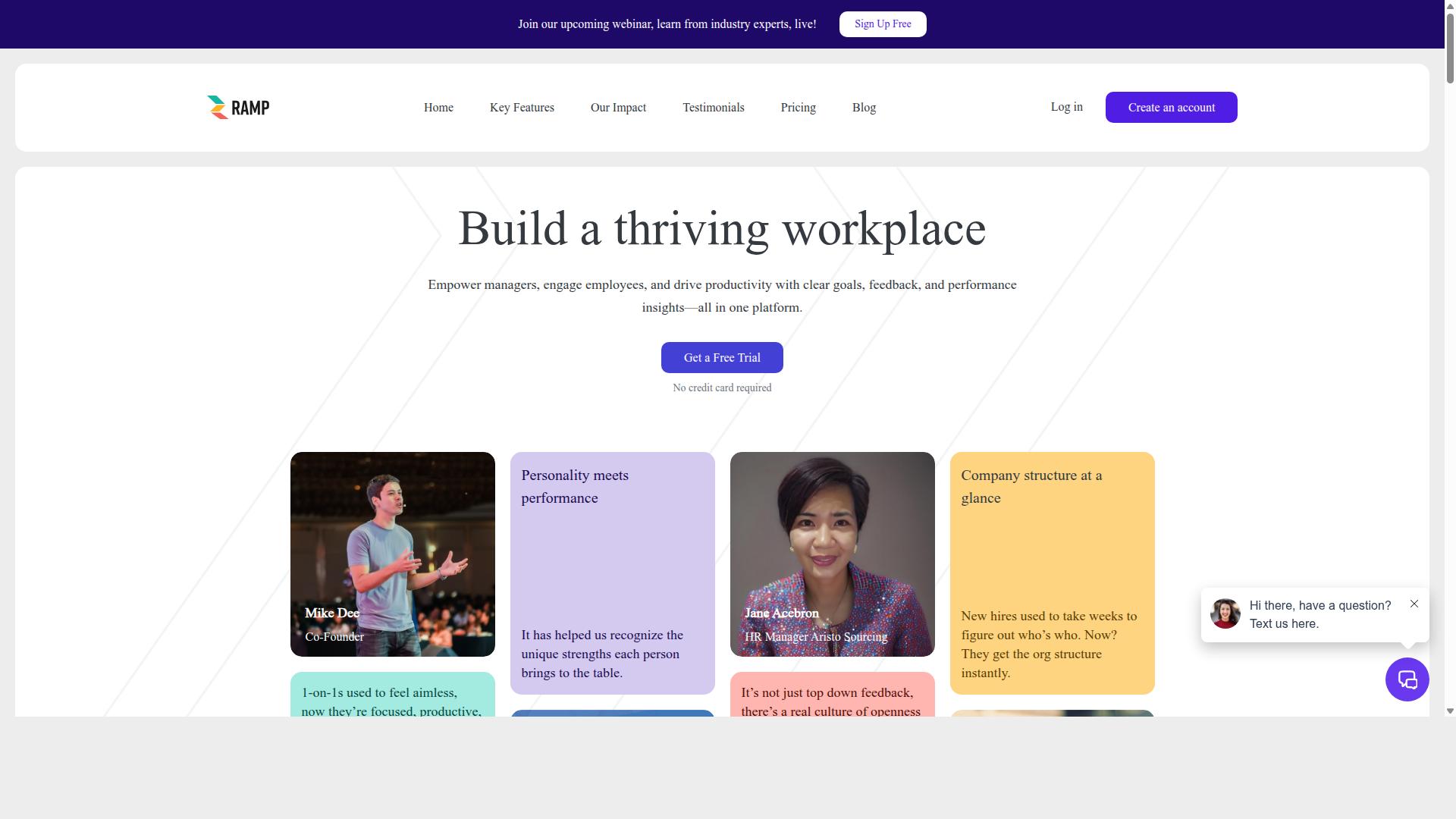
HeyRamp stands out as the best overall Workboard alternative by combining OKR tracking with integrated performance management and engagement tools in one flat-fee platform. It is designed as an all-in-one solution that supports employee engagement, performance management, and workplace communication under a single roof.
This makes the platform a natural fit for leadership, managers, HR professionals, and individual contributors alike. Instead of juggling separate tools for goals, reviews, and feedback, teams get one connected system that supports the entire execution cycle.
HeyRamp is available globally and built for ease of use. The interface is straightforward, which means teams can adopt it without a steep learning curve or lengthy onboarding process.
Integrated OKR and Performance Management for Execution
HeyRamp's integrated platform lets you set and cascade OKRs, conduct performance reviews, and track progress with 1-on-1 meeting tools-all while automating compliance documentation. The platform connects individual goals to company objectives, giving everyone a clear view of how their daily work supports strategic execution.
Key capabilities include company structure visualization, which helps you see how teams and objectives align across the organization. The 1-on-1 meeting tools come with organized agendas and action tracking, so conversations lead to accountability rather than vague next steps.
Feedback tools and personality insights add another layer to execution management. When managers understand how their people communicate and work best, they can guide teams more effectively toward quarterly goals and annual planning milestones.
Real-time progress visualization keeps objectives and key results front and center. Leadership can spot roadblocks early, while HR gains people analytics dashboards and leadership insights that inform decisions about talent and team development.
HeyRamp is trusted by 20+ organizations and 400+ teams. The platform operates on a flat fee, which simplifies budgeting compared to per-seat pricing models. A 14-day trial lets you test the full experience before committing.
2. Lattice
Lattice is a well-known performance management platform that emphasizes continuous feedback and goal alignment, making it a strong contender for teams focused on employee development. It is designed for HR-led organizations that want to combine performance reviews with strategic execution tracking in one system.
For teams comparing Workboard alternatives, Lattice stands out because it treats goal tracking as part of the broader people management picture. The platform is particularly suited for HR leaders and managers who need visibility into both employee growth and quarterly objectives. Its pricing starts at $11 per user per month with annual billing, and it maintains a strong reputation with users, reflected in its G2 rating of 4.7 out of 5.
While Lattice may not be the first choice for teams seeking pure project portfolio management, it offers a practical bridge between people development and execution management. The platform works best when your organization prioritizes regular performance conversations alongside strategic planning.
Performance Reviews and Goal Alignment
Lattice excels in structuring performance reviews and aligning individual goals with company objectives through its intuitive review cycles and goal-tracking features. Managers can run customizable review templates that fit their team culture, whether that means quarterly check-ins, annual assessments, or continuous feedback loops.
Real-time feedback is a core strength of the platform. Team members can share praise, suggestions, and progress updates without waiting for formal review periods. This creates a steady stream of communication that supports both performance management and strategic execution tracking.
On the goal alignment side, Lattice helps cascade objectives from leadership down to individual contributors. This ensures that daily work connects to broader company priorities, which is essential for teams evaluating OKR software options. The platform integrates with Slack and other common workplace tools, making it easier to keep conversations in the flow of work.
One consideration for buyers is that full OKR functionality may require additional modules. Teams that need advanced objectives and key results features should verify which capabilities are included in their plan. For most HR-focused organizations, however, Lattice provides a solid balance of review tools, goal tracking, and employee engagement features that support long-term alignment.
3. Leapsome
Leapsome combines continuous feedback and OKR tracking to help teams execute strategy while fostering a culture of transparency and development. The platform is designed for organizations that want to connect people-related insights with their strategic planning efforts.
It suits growing companies that prioritize employee voice alongside agile planning. By pairing performance management with strategy execution, Leapsome helps teams stay aligned on objectives and key results without losing sight of individual development.
Continuous Feedback and Strategy Execution
Leapsome enables ongoing feedback through pulse surveys and review cycles, while its OKR module ensures strategic initiatives stay on track with clear milestones. The platform supports 360 degrees reviews, engagement surveys, and learning and development features, all within one system. This makes it a solid choice for HR teams that want to reduce their tech stack.
The platform connects feedback directly to goal tracking. When employees share input through surveys or reviews, managers can use those insights to adjust objectives and key results in real time. This creates a feedback loop where strategy execution responds to what employees actually experience on the ground.
Leapsome includes several practical features for execution management:
- AI-powered analysis and action plans that help teams interpret survey results
- Customizable templates for reviews, goals, and engagement surveys
- Automated review cycles with anonymity filters for honest input
- Time tracking and absence management for broader workforce visibility
Its analytics dashboards track adoption and engagement, giving leaders visibility into how well the platform is being used. The tool is ISO 27001:2022 certified and GDPR and CCPA compliant, which matters for organizations with strict data requirements. Available in 38 languages, Leapsome works well for distributed teams. Pricing starts at US$3 per user per month, making it an accessible option for growing organizations focused on feedback, development, and strategic alignment.
4. 15Five
15Five focuses on manager coaching and employee engagement, offering real-time progress tracking that helps teams stay aligned and motivated. The platform is built around the idea that better managers create stronger, more accountable teams.
For organizations exploring Workboard alternatives, 15Five stands out as a performance management system that prioritizes the human side of execution. It suits companies that want to improve manager effectiveness and reduce turnover through structured feedback loops and ongoing coaching conversations.
15Five positions itself as an AI-powered performance management platform trusted by a large number of organizations. Its product suite spans performance reviews, employee engagement, compensation management, and manager enablement tools.
Manager Coaching and Real-Time Progress Tracking
15Five's platform includes weekly check-ins, 1-on-1 agendas, and a performance review module, enabling managers to coach effectively and track progress in real time. These tools create a consistent rhythm of communication between managers and their direct reports.
Weekly check-ins give employees a structured way to share updates, flag obstacles, and reflect on their priorities. Managers can review these responses before 1-on-1 meetings, making every conversation more focused and productive. This approach supports accountability without adding heavy administrative overhead.
The platform also includes engagement surveys and analytics that give leaders visibility into team sentiment and potential retention risks. Features like Kona AI Coach and the Insights Dashboard help managers deliver timely feedback and identify coaching opportunities early.
However, teams should note that OKR features may be more limited compared to dedicated strategic execution tools. 15Five is strong on performance management and employee engagement, but organizations running complex cascading goals or quarterly OKR programs might find the goal tracking functionality less robust.
For companies that value manager coaching, feedback loops, and employee engagement, 15Five is a credible alternative. Teams needing deep OKR software capabilities for strategic execution may want to pair it with a dedicated alignment tool or evaluate Workboard alternatives with stronger goal management features.
5. Culture Amp
Culture Amp is renowned for its engagement analytics and performance tools, including goal cascading that aligns individual efforts with organizational strategy. The platform is built around a people and culture framework, making it a natural fit for HR teams and people operations leaders.
Culture Amp targets mid-market and enterprise organizations, typically those with 200 or more employees. Its approach centers on collecting employee feedback and translating that data into actionable insights for leaders. For teams evaluating Workboard alternatives, Culture Amp stands out when the primary concern is workforce sentiment rather than execution velocity.
That said, strategic execution tracking is not its core strength. The platform excels at understanding how employees feel about their work, but it does not offer the same depth of project portfolio management or initiative tracking found in dedicated OKR software. It is best viewed as a complement to execution tools, not a full replacement.
Engagement Analytics and Goal Cascading
Culture Amp offers robust engagement surveys and analytics, plus a goal-setting feature that allows cascading objectives down the organization. The survey suite includes pulse surveys, onboarding surveys, offboarding surveys, and DEI-focused questionnaires, all designed to capture a complete picture of employee experience.
The analytics dashboards present this data in digestible formats, helping HR teams spot trends across departments, teams, and demographics. Performance reviews and continuous feedback tools round out the offering, giving managers a structured way to discuss progress and development. An AI Coach feature also provides personalized performance guidance for individual employees.
Goal cascading in Culture Amp works by letting leaders set objectives that flow down to teams and individuals. This creates a visible line of sight from daily work to company priorities, which supports strategic alignment across the organization. When paired with 1-on-1 conversation templates and check-ins, the platform reinforces accountability at the people level.
Integration with HRIS systems is a notable advantage, allowing customer data to flow between Culture Amp and core HR records. However, teams should note that Culture Amp is more focused on engagement and performance management than on OKR execution or milestone tracking. If your primary need is real-time reporting on initiative progress and KPI tracking, this platform may feel light on execution features.
Pricing is not publicly listed, and interested teams must request a demo to get a quote. Third-party sources suggest the entry point is around $4,500 per year, but this requires a sales conversation to confirm. Culture Amp is a strong choice for HR-led organizations, yet it works best alongside a dedicated execution management tool rather than as the sole platform for strategy deployment.
6. Perdoo
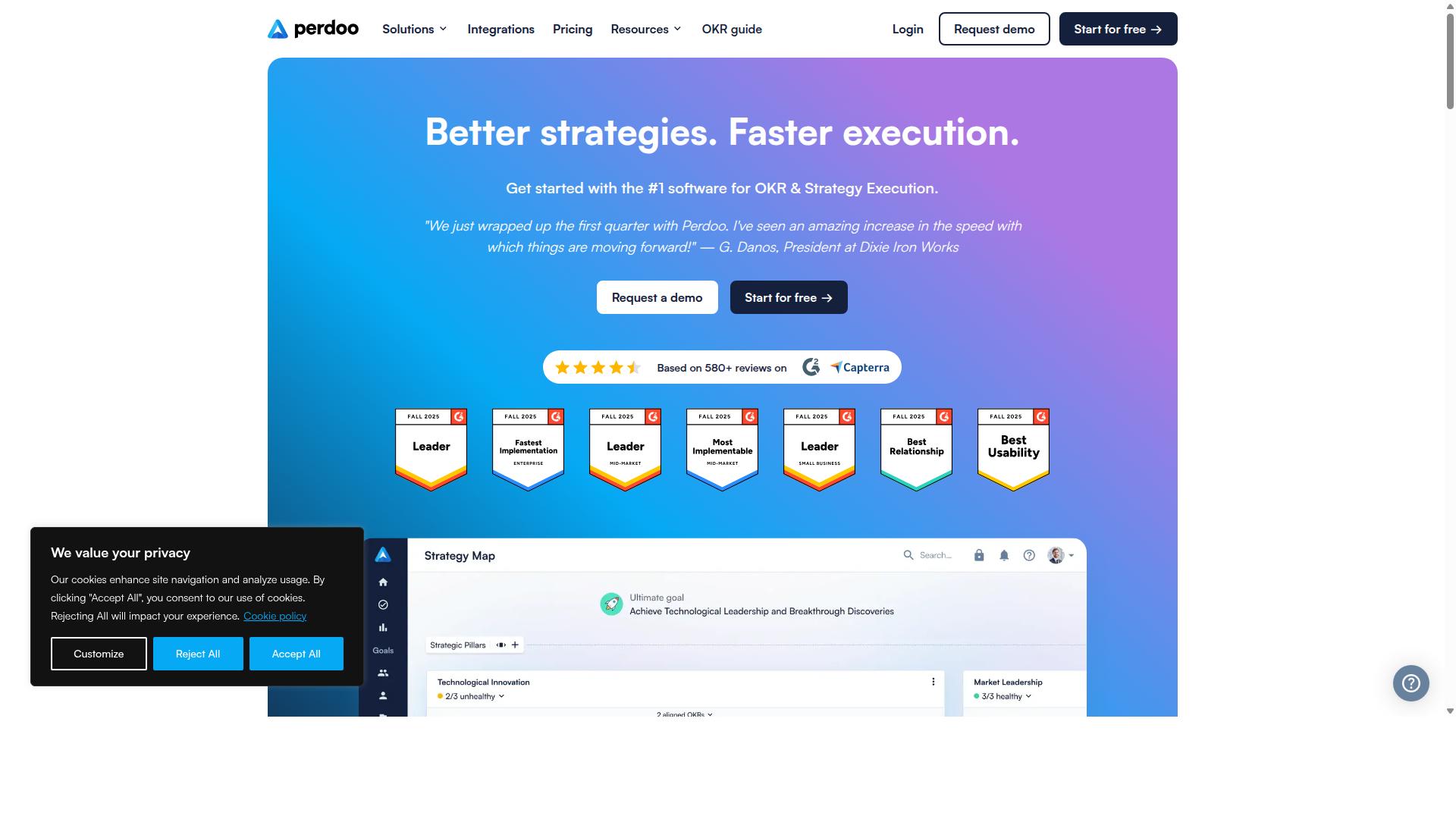
Perdoo is an OKR-first platform that helps teams define and execute strategy with clear roadmaps and progress tracking. It positions itself as a complete solution for organizations that want to connect high-level strategic goals with day-to-day work.
This tool suits teams that prefer a dedicated OKR approach rather than a broader project management suite. Perdoo focuses on integrating strategy, goals, and performance in one place, which makes it attractive for companies that want to build their execution process around objectives and key results.
For organizations comparing Workboard alternatives, Perdoo stands out because of its singular focus on goal management. It is less about task management and more about ensuring every initiative traces back to a strategic objective.
OKR-First Strategy with Execution Roadmaps
Perdoo provides a structured OKR framework with roadmaps that link initiatives to objectives, ensuring transparent execution and real-time progress updates. The platform supports setting direction, aligning teams, and tracking both KPIs and OKRs through dedicated dashboards.
Its execution roadmaps help teams visualize how daily work contributes to broader company goals. This creates a direct line between strategy deployment and the actual tasks people complete, which supports accountability and transparency across departments.
Perdoo also offers integration capabilities that allow teams to connect their existing tools for smoother collaboration. However, the platform may lack performance review features, which could be a consideration for organizations that want to manage both strategic execution and employee evaluations in one system.
Key strengths of Perdoo include:
- Clear cascading goals from company level to team level
- Initiative tracking that ties projects to measurable outcomes
- Real-time scorecards and dashboards for progress updates
- Annual and quarterly planning cycles supported by the OKR framework
One practical note for smaller teams: some reviews suggest Perdoo's paid plans may have a minimum seat requirement, and per-user pricing could add up as organizations grow. Teams should evaluate their size and budget before committing to this OKR software.
Overall, Perdoo works well for companies that want a purpose-built goal tracking solution with strong alignment features. It may not replace an entire project portfolio management tool, but it excels at keeping strategic execution visible and measurable.
7. Betterworks
Betterworks is an enterprise-grade platform that focuses on strategic alignment and cadence through OKRs and continuous performance management. It is built to serve large organizations that need to connect executive strategy with day-to-day work across many teams and departments.
For companies already using Workboard for strategic execution, Betterworks offers a comparable approach with a strong emphasis on cascading goals and ongoing feedback. Its design centers on making objectives and key results visible throughout the entire organization, which supports transparency and accountability at scale.
This platform is particularly well suited for enterprises with complex structures, multiple business units, or global workforces. If your organization operates with hundreds or thousands of employees, Betterworks provides the structure needed to keep everyone moving in the same direction.
Enterprise-Grade Strategic Alignment and Cadence
Betterworks offers a comprehensive OKR and performance management suite with cadence-based check-ins, analytics, and alignment tools designed for enterprise needs. The platform combines goal tracking with performance reviews, giving leaders a full picture of both progress and employee development.
Key features typically include quarterly goal setting, continuous check-ins, and real-time progress updates. These tools help teams maintain momentum between formal review cycles, which is essential for strategic execution in fast-moving organizations.
Betterworks also provides analytics and dashboards that give leadership visibility into how work aligns with broader company objectives. This real-time reporting capability helps identify bottlenecks early and keeps initiative tracking on schedule.
The platform integrates with HRIS systems and other enterprise tools, which simplifies data flow and reduces manual work. For organizations already using a suite of HR and productivity software, these integrations make adoption smoother and keep information consistent across systems.
However, Betterworks may be more expensive and complex for smaller teams. The breadth of features can feel overwhelming for organizations that simply need straightforward OKR software or basic goal tracking. Research suggests that companies with fewer than 100 employees often find lighter-weight alternatives easier to implement and manage.
For large enterprises with dedicated HR and strategy teams, Betterworks offers a credible option for strategy deployment and performance management. Its focus on alignment and cadence makes it a strong fit for organizations that prioritize structured execution and regular feedback loops.
How to Choose the Right Option
To choose the right Workboard alternative, assess your team's size, budget, and the specific features you need for strategic execution, such as OKR tracking, performance reviews, or engagement analytics. Start by defining your primary use case. Are you focused on cascading goals and quarterly OKRs, or do you need broader performance management with feedback loops and employee engagement tools?
Your answer will narrow the field quickly. Some platforms excel at KPI tracking and scorecards, while others prioritize collaboration and check-ins. Knowing whether you need a full execution management suite or a lightweight goal tracking tool prevents overbuying.
Evaluate scalability and pricing before you commit. Per-seat pricing can become expensive as your organization grows, while a flat fee offers predictable costs. Consider whether the platform supports annual planning, agile planning, and roadmap visibility at enterprise scale, or if it caps out at team-level use.
Check integration with your existing tools, especially Slack, project management apps, and HR systems. Seamless integration reduces friction and keeps progress updates flowing without manual data entry. A tool that requires constant context switching will hurt adoption, no matter how powerful its analytics are.
User experience matters more than most buyers admit. If the interface feels cluttered or unintuitive, your team will resist daily check-ins and milestone tracking. Prioritize transparency and accountability by choosing software that makes progress visible at a glance, with dashboards that executives and individual contributors both find useful.
Finally, take advantage of free trials. A hands-on test reveals whether the workflow automation, reporting, and prioritization features actually match your team's rhythm. Ask your managers to run a mock quarterly goal cycle during the trial period.
| Consideration | What to Look For |
|---|---|
| Primary use case | OKR software vs. performance reviews vs. employee engagement |
| Pricing model | Per-seat cost vs. flat fee; scalability as headcount grows |
| Integrations | Slack, HRIS, project tools; native connections reduce friction |
| User adoption | Intuitive check-ins, progress updates, and scorecards |
| Trial period | Real-world testing with your own quarterly goals |
For teams weighing pricing flexibility, HeyRamp offers a flat fee and a 14-day trial, which may be attractive compared to per-seat models that scale with headcount. This structure appeals to leadership and HR teams who want predictable budgeting while still evaluating the platform against their strategic execution needs.
Ultimately, the right alternative aligns with how your organization already works. Whether you need cascading goals for annual planning or real-time reporting for agile cycles, match the tool to your workflow, not the other way around.
Final Verdict
For teams seeking a comprehensive, all-in-one solution that integrates OKR tracking with performance management and engagement, HeyRamp emerges as the best overall choice. The platform stands apart from other Workboard alternatives by bundling strategic execution tools with people-centric features that most goal tracking software treats as separate purchases.
What makes HeyRamp particularly compelling is its one flat fee pricing model. Instead of paying per seat or per module, organizations get access to the full suite of execution management and performance tools without surprise costs as teams scale.
Beyond pricing, HeyRamp includes built-in training and education so teams can adopt OKR software quickly. The platform also generates automatic compliance documentation, which reduces administrative burden while keeping strategic execution aligned with organizational requirements.
For managers, the platform offers instant coaching tips and automated reminders to keep check-ins and progress updates on schedule. Personality insights are integrated directly with performance tools, helping leaders understand how to motivate each team member during quarterly goals and annual planning cycles.
The aggregated people analytics dashboards provide visibility into both initiative tracking and employee engagement. Guided conversation templates support difficult discussions, which strengthens feedback loops and accountability across the organization.
HeyRamp is trusted by 20+ organizations and 400+ teams, making it a proven choice for companies that want more than basic KPI tracking. Its global availability means distributed teams can align on objectives and key results regardless of location.
If your team is evaluating Workboard alternatives, start with the 14-day trial to see how HeyRamp handles cascading goals, scorecards, and real-time reporting in one place. The combination of strategic execution features, built-in training, and transparent pricing makes it the strongest recommendation for most organizations.
Recommended Resources: